Singapore: A City of Seamless Wonders and Flavourful Encounters
From the moment you arrive at Changi Airport, Singapore greets you not just with efficiency, but with grace. This dazzling city-state is a masterclass in blending cultures, flavors, technology, and nature into one cohesive urban adventure. Whether you’re noshing on hawker delights at Maxwell Food Centre or riding sleek MRT trains to Sentosa Island, every moment in Singapore feels curated yet remarkably spontaneous.
Despite its gleaming skyline and tech-forward vibe, Singapore’s warmth is unmistakable. Locals are quick to help—whether you’re lost in the MRT or hesitating at a hawker stall. Conversations with taxi drivers often turn into mini history lessons or cheeky banter. Food vendors might tease you for not knowing how spicy their sambal is, then hand you a tissue with a wink.
It’s a city where kindness is woven into the everyday—where order meets generosity, and smiles are tucked between skyscrapers.

Changi Airport: Where Transit Feels Like Travel
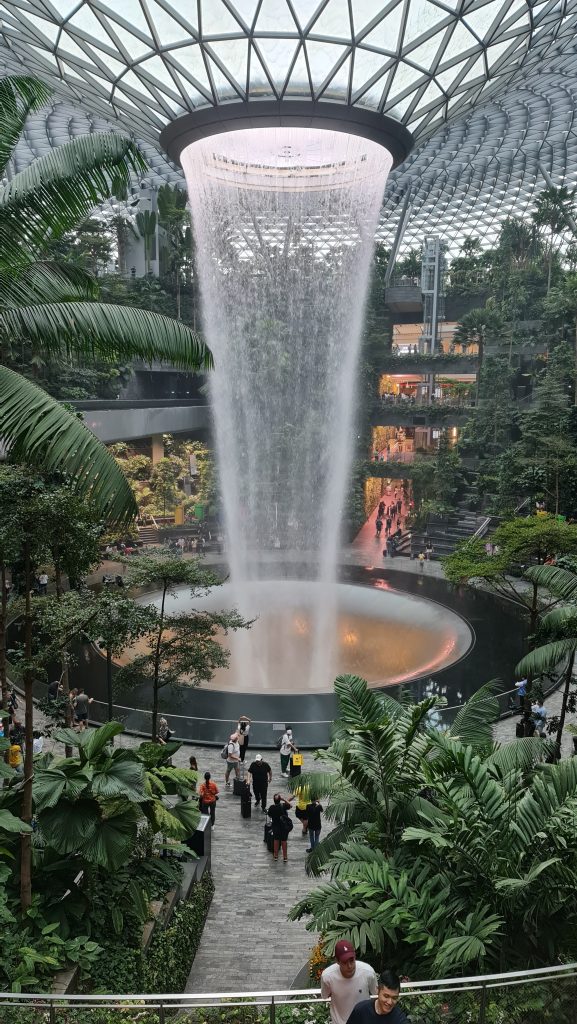
I’ve passed through my fair share of airports, but Singapore’s Changi is in a league of its own. It’s not just a stopover—it’s a destination that invites you to linger, explore, and marvel. The moment you step into Jewel Changi, you’re greeted by the surreal sight of the Rain Vortex, the world’s tallest indoor waterfall. It cascades dramatically through a lush forest valley, mist rising like something out of a dream. At night, it transforms into a hypnotic light and sound show, drawing travelers and locals alike into its orbit.
Wandering through Jewel feels like walking through a futuristic greenhouse—glass, steel, and greenery in perfect harmony. I found myself losing track of time in the Canopy Park, where foggy bowls and mirror mazes playfully distort reality. The Canopy Bridge, with its glass-bottom walkway suspended high above the forest floor, offers a thrill and a view that’s hard to beat. And if you’re craving a bite, the food scene here is as diverse as Singapore itself—whether it’s Hainanese chicken rice or Japanese soufflé pancakes, you’ll find it.
But Changi’s magic isn’t confined to Jewel. Each terminal has its own pocket of serenity. Terminal 3’s Butterfly Garden is a tropical haven, alive with fluttering wings and the gentle hum of water. Terminal 2 has a rooftop sunflower garden that feels like a slice of Tuscany, while Terminal 1’s kinetic rain sculpture mesmerizes with its slow, meditative choreography. It’s art, nature, and engineering all rolled into one.
Even the practicalities are a pleasure. The Skytrain glides smoothly between terminals, signage is clear, and staff are genuinely helpful. If you need a nap or a shower, there are short-stay hotels and lounges that feel more boutique than utilitarian. And for the curious, the Changi Experience Studio offers interactive exhibits that dive into the world of aviation in surprisingly fun ways.
Changi doesn’t just make travel easier—it makes it beautiful. It’s the kind of place that reminds you why you travel in the first place: to be surprised, to feel something, to see the extraordinary in the everyday. If you ever find yourself with a layover here, don’t rush through. Stay a while. Let the waterfall pull you in.
Marina Bay Sands: Singapore’s Crown Jewel of Luxury
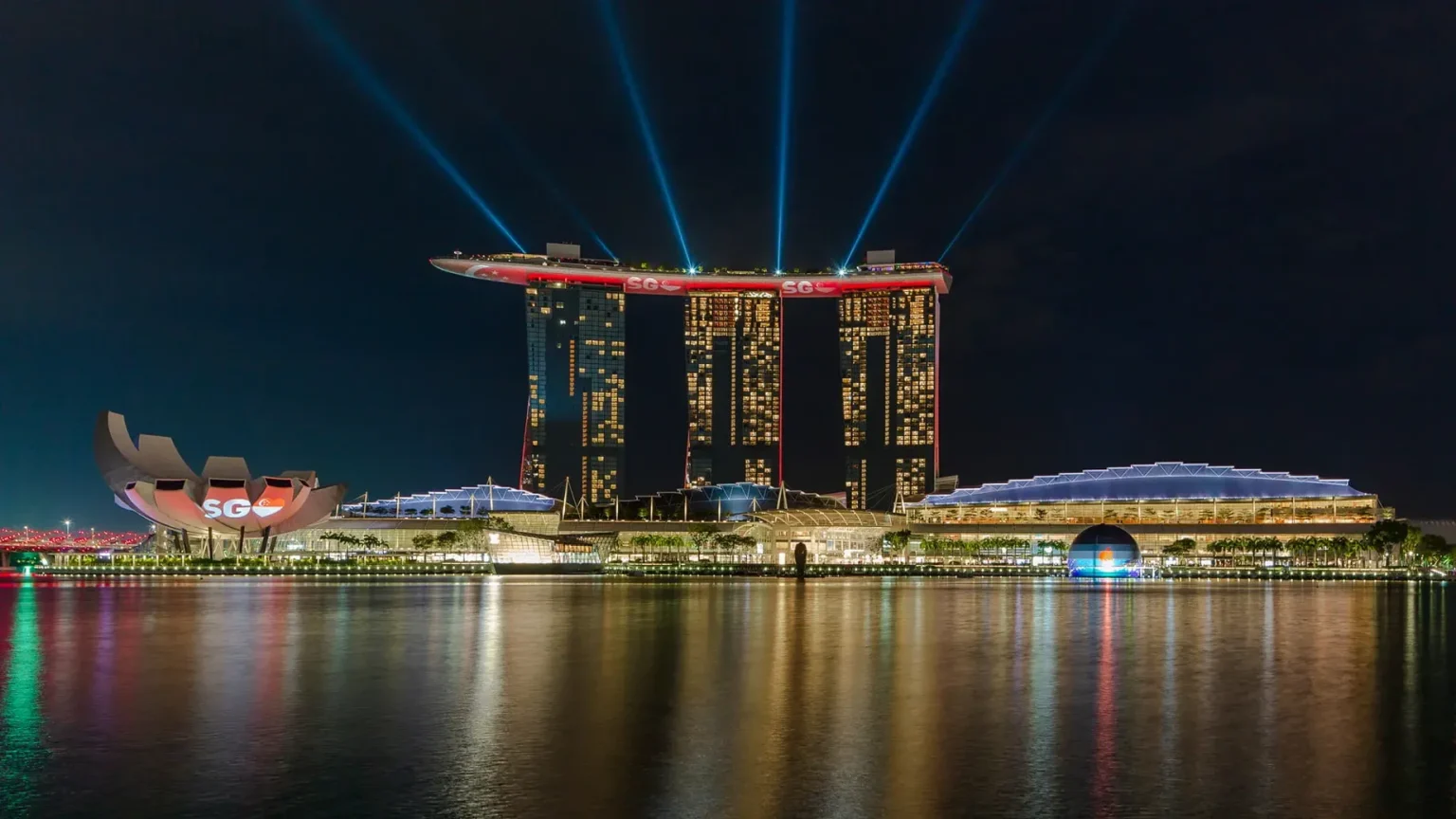
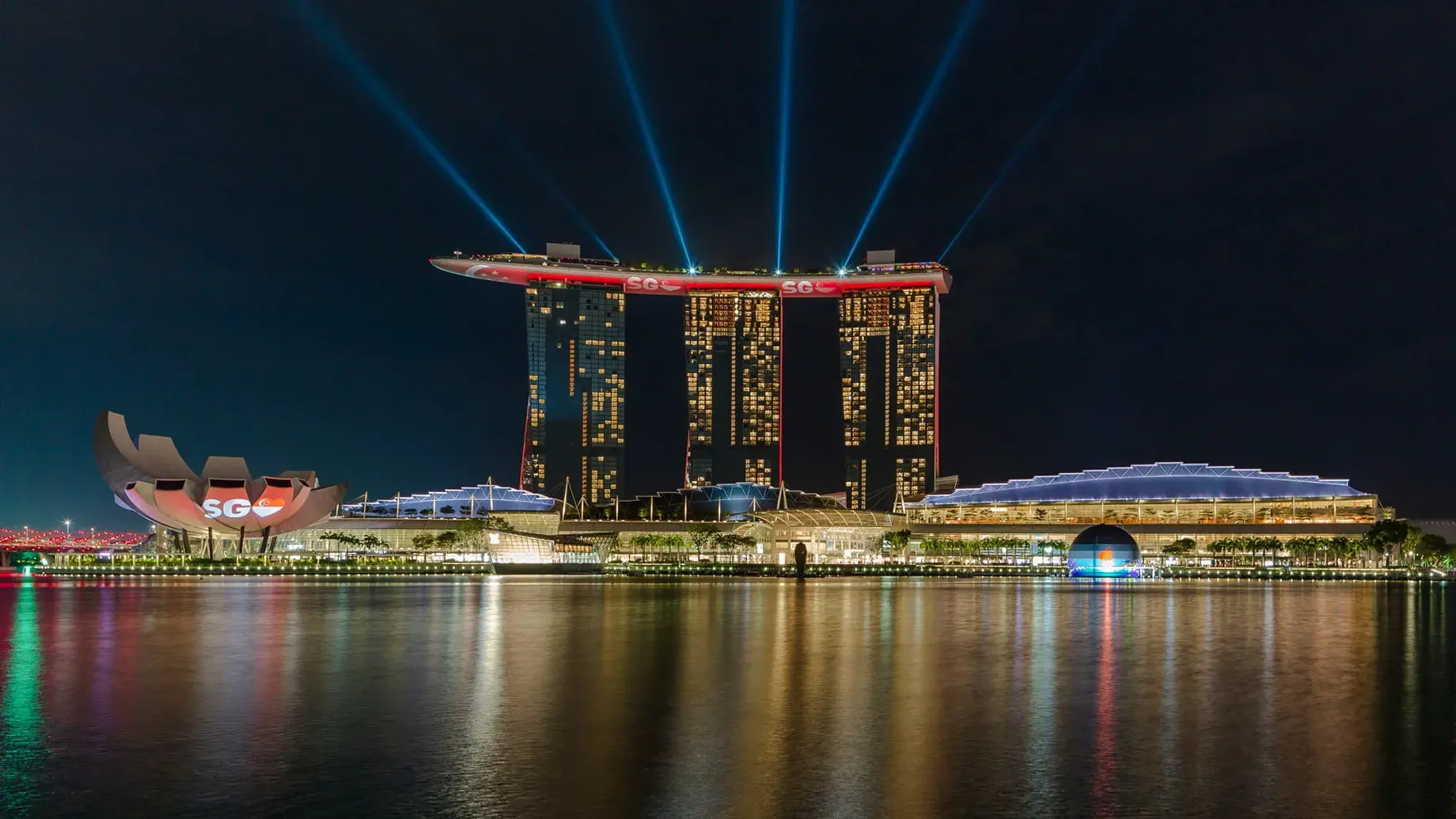
If Changi Airport is Singapore’s welcome mat, then Marina Bay Sands is its glittering crown. Rising like a futuristic colossus on the edge of Marina Bay, this integrated resort is more than just a hotel—it’s a statement. With its three soaring towers connected by the gravity-defying SkyPark, Marina Bay Sands feels like something plucked from a sci-fi dream and dropped into the heart of Southeast Asia.
The moment I stepped into the lobby, I felt the shift. The air was cooler, the lighting softer, and everything—from the marble floors to the curated art installations—whispered luxury. But the real magic happens 57 storeys above, where the Infinity Pool stretches like a liquid ribbon across the skyline. Floating there, with the city shimmering below and palm trees swaying overhead, you don’t just feel pampered—you feel suspended between worlds. It’s exclusive to hotel guests, and yes, it’s worth every cent.
Beyond the pool, the SkyPark Observation Deck offers panoramic views that sweep from Gardens by the Bay to the Singapore Strait. It’s the kind of place where you pause, breathe, and realize how far you’ve come—literally and metaphorically.
Inside, Marina Bay Sands is a playground for the senses. The ArtScience Museum, shaped like a blooming lotus, invites you to explore the intersection of creativity and technology. The Shoppes at Marina Bay Sands are a retail fantasy, with Chanel, Gucci, and Louis Vuitton nestled beside serene canals where you can take a Sampan ride under a digital sky. And when hunger strikes, the resort’s constellation of celebrity chef restaurants—from Wolfgang Puck’s Spago to Gordon Ramsay’s Bread Street Kitchen—turn every meal into a performance.
For those seeking indulgence on another level, the Paiza Royal Collection redefines ultra-luxury. Think private butlers, Himalayan salt walls, and Savoir mattresses layered with Mongolian yak wool and cashmere. Suites here aren’t just rooms—they’re sanctuaries. One even features a golf simulator and a karaoke lounge, because why not?
And yet, despite all the grandeur, Marina Bay Sands never feels cold or distant. There’s warmth in the service, intention in the design, and a sense of wonder that lingers long after you’ve checked out. It’s not just a place to stay—it’s a place to feel alive.
The Garden City: Nature With Architectural Poetry
The Garden City: Nature With Architectural Poetry
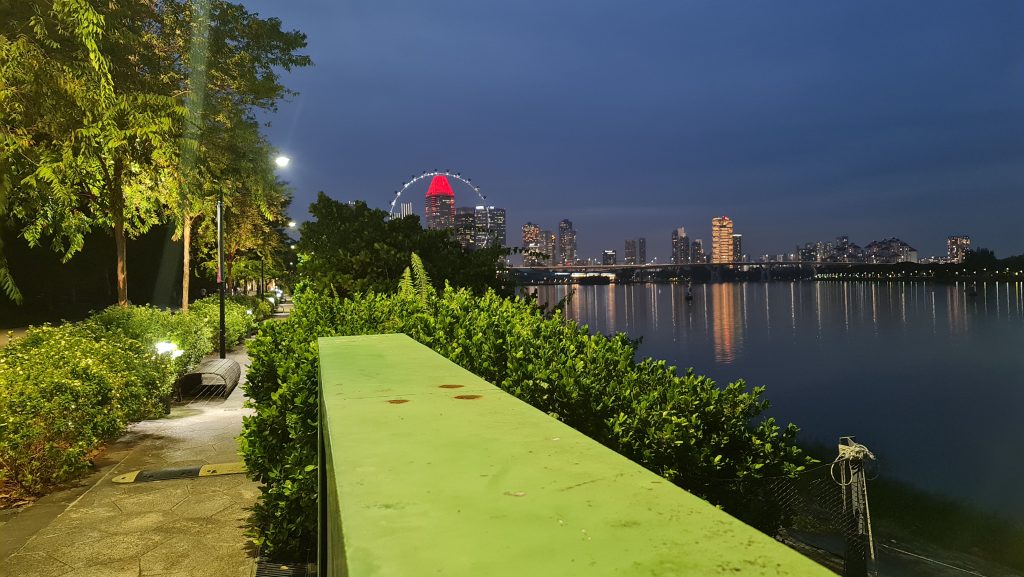
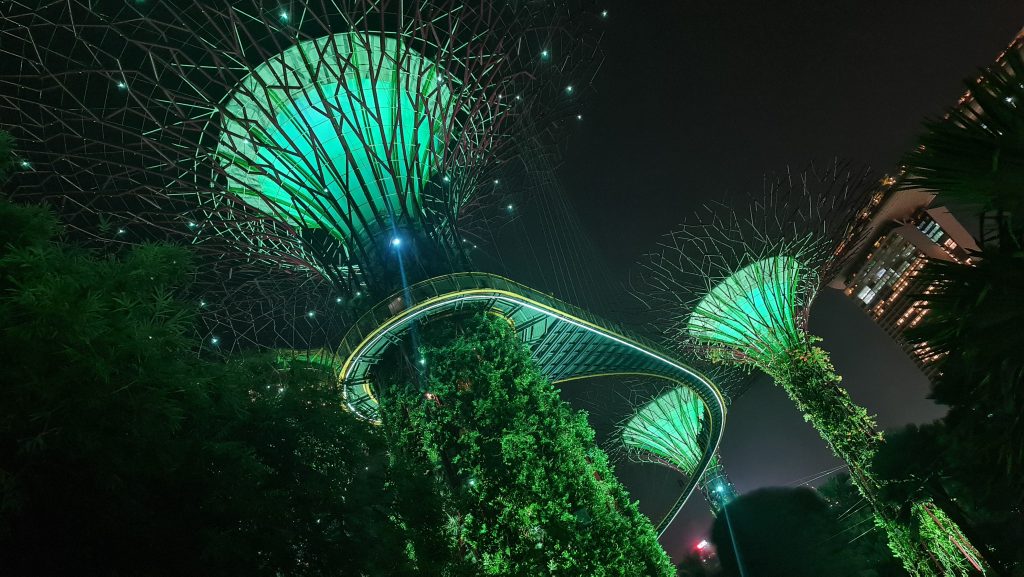
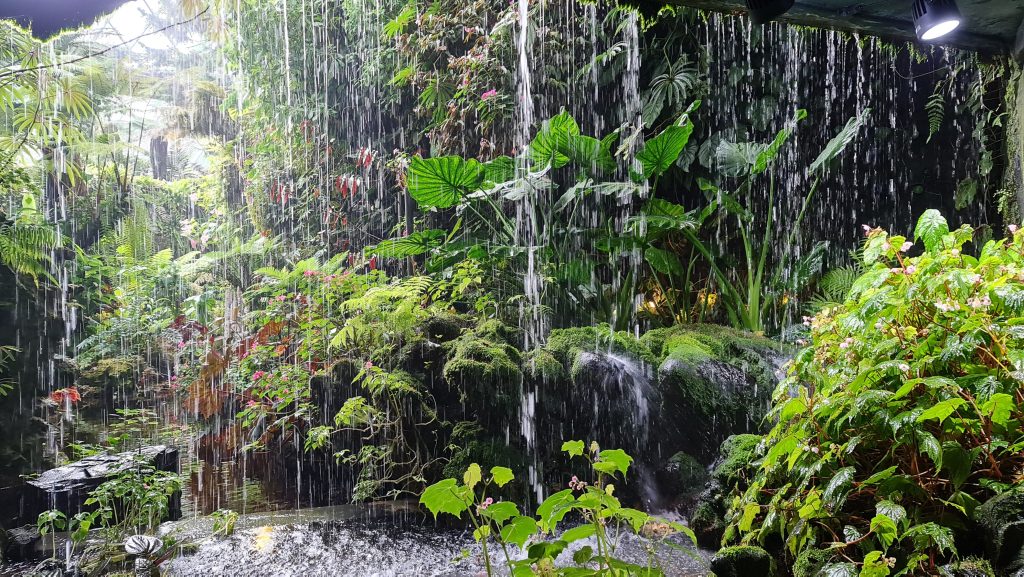
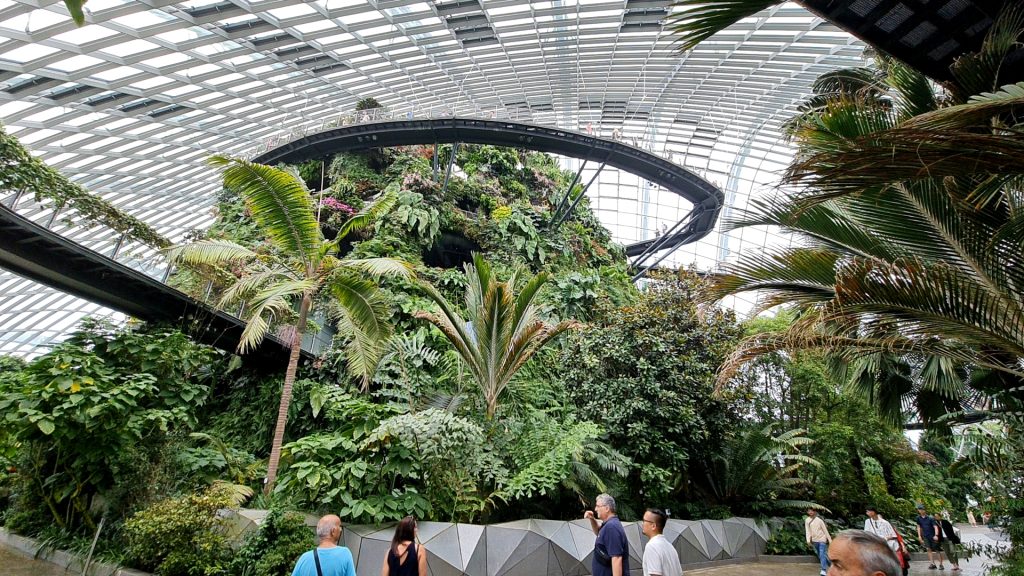
Singapore isn’t just a city—it’s a living canvas where nature and architecture dance in harmony. From the moment you arrive, there’s a quiet sense of intentionality in how green spaces are woven into the urban fabric. It’s not just about parks or trees lining the streets—it’s about a philosophy. A vision that began in the 1960s when then-Prime Minister Lee Kuan Yew declared his dream of transforming Singapore into a “Garden City.” He wasn’t just planting trees—he was planting hope, identity, and pride.
Today, that vision has matured into something even more ambitious: a City in Nature. Walk through the city and you’ll see it everywhere—vertical gardens climbing skyscrapers, rooftop farms cooling high-rises, and lush biodiversity corridors threading through concrete. Buildings like PARKROYAL COLLECTION Pickering and Oasia Hotel Downtown aren’t just architectural marvels—they’re ecosystems. Designed by visionary firms like WOHA, these structures breathe with greenery, using solar cells, rainwater harvesting, and natural ventilation to blur the line between built and organic.
Even the waterways have been reimagined. Concrete canals have given way to meandering rivers in places like Bishan-Ang Mo Kio Park, where dragonflies skim the surface and children splash in nature playgardens. The Eco-Link@BKE, a bridge for wildlife, connects fragmented habitats across expressways, allowing animals to roam freely and safely. It’s urban planning with empathy—for both people and the planet.
What struck me most was how accessible it all feels. No matter where you are in Singapore, you’re never more than a ten-minute walk from a park. Therapeutic gardens offer quiet refuge for those seeking emotional restoration, while native orchids and hornbills return to spaces once dominated by steel and glass. It’s a city that doesn’t just accommodate nature—it celebrates it.
Singapore’s green transformation isn’t just aesthetic—it’s deeply strategic. With limited land and resources, the city-state has turned necessity into innovation. Green roofs reduce heat, vertical gardens purify air, and biodiversity corridors foster resilience. It’s a model that other cities are now studying, not just for its beauty, but for its brilliance.
In a world where urban sprawl often means ecological loss, Singapore offers a counter-narrative: that cities can be lush, breathable, and deeply human. It’s architectural poetry written in leaves and light.
Maxwell Food Centre: Hawker Heaven on a Plate
Tucked into the heart of Chinatown, Maxwell Food Centre is where Singapore’s culinary soul comes alive. It’s not just a place to eat—it’s a place to feel the pulse of the city. As you step inside, the air thickens with the scent of garlic, chili, and wok-fried magic. The metallic clang of ladles against hot pans, the sizzle of oil meeting batter, and the rhythmic hum of Singlish chatter create a soundtrack that’s uniquely Singaporean.
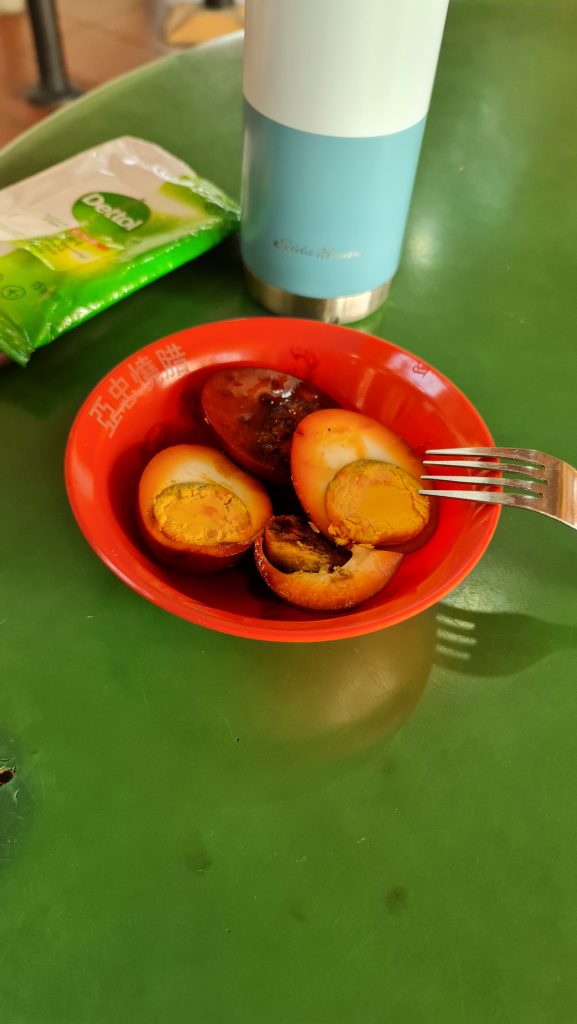
Everyone talks about Tian Tian Hainanese Chicken Rice, and rightly so—its silky chicken and fragrant rice have earned praise from Anthony Bourdain and Gordon Ramsay. But don’t stop there. Try a bowl of laksa, rich with coconut and spice, or dig into carrot cake, a savory stir-fried dish made with radish and eggs (no frosting in sight). Each stall has its own specialty, and locals will passionately debate which one reigns supreme. It’s not just a meal—it’s a cultural exchange.
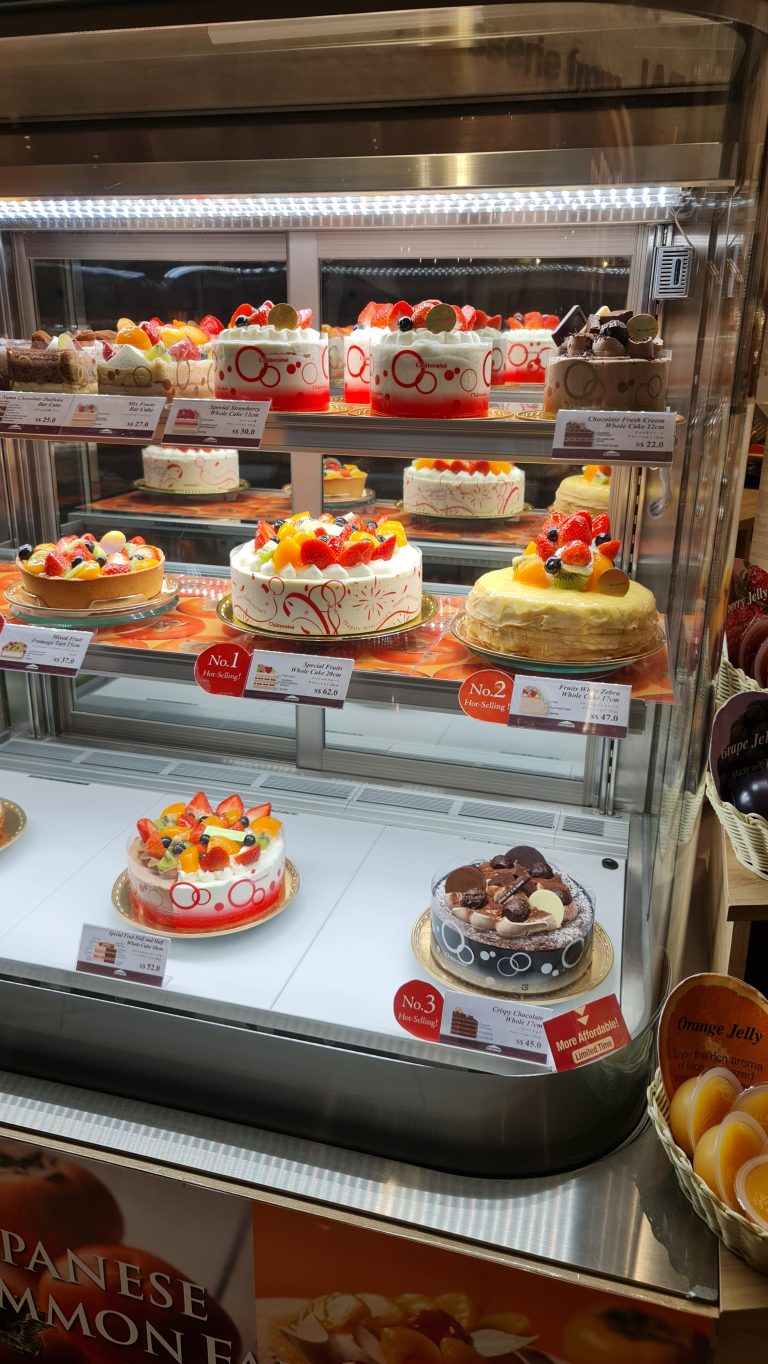
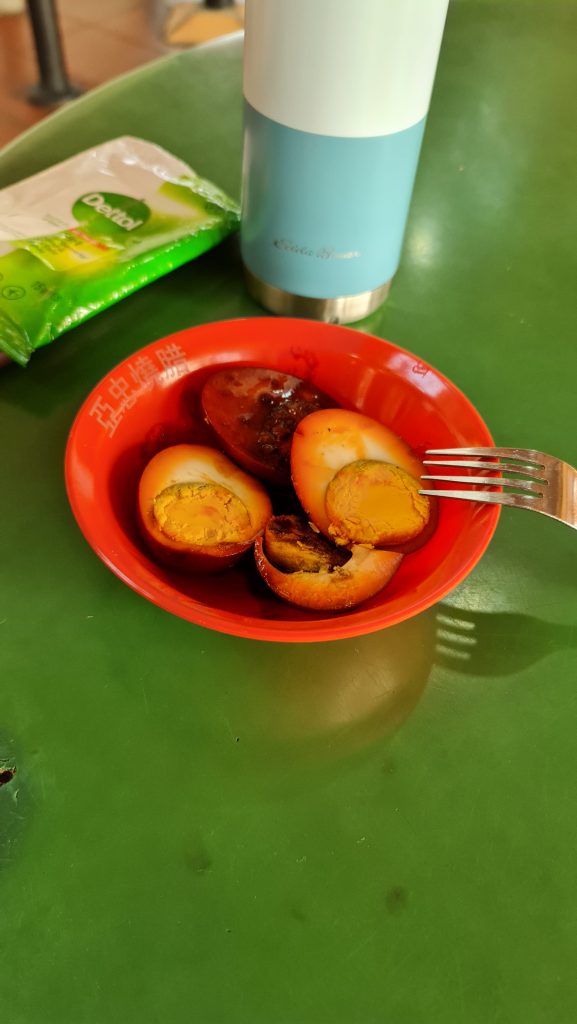
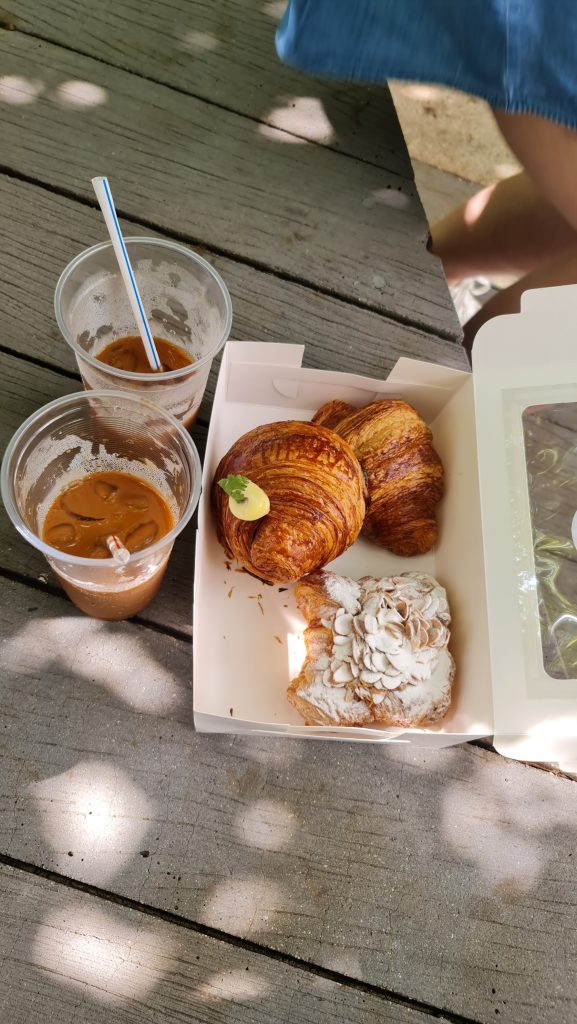
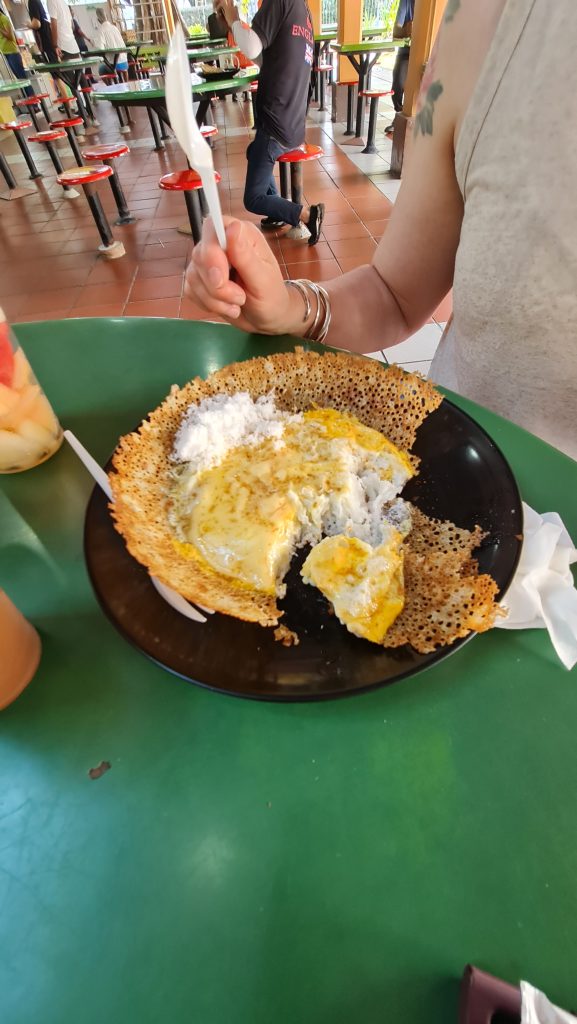
Singapore’s Food Culture: A Fusion Feast
In Singapore, food isn’t just sustenance—it’s identity. It’s how people connect, celebrate, and argue (mostly about which hawker stall does it best). The city’s multicultural makeup means you can find Malay nasi goreng, Indian biryani, and Chinese dumplings within steps of each other. Hawker centres are the beating heart of this culture—affordable, communal, and bursting with flavor.
Even high-end restaurants pay homage to street food. Michelin-starred chefs elevate classics like bak chor mee and char kway teow, proving that heritage and innovation can share a plate. Eating here is a ritual, a joy, and often, a spontaneous adventure.
Despite its gleaming skyline and tech-forward vibe, Singapore’s warmth is unmistakable. Locals are quick to help—whether you’re lost in the MRT or hesitating at a hawker stall. Conversations with taxi drivers often turn into mini history lessons or cheeky banter. Food vendors might tease you for not knowing how spicy their sambal is, then hand you a tissue with a wink.
It’s a city where kindness is woven into the everyday—where order meets generosity, and smiles are tucked between skyscrapers.
Getting Around: The MRT and Bus Ballet
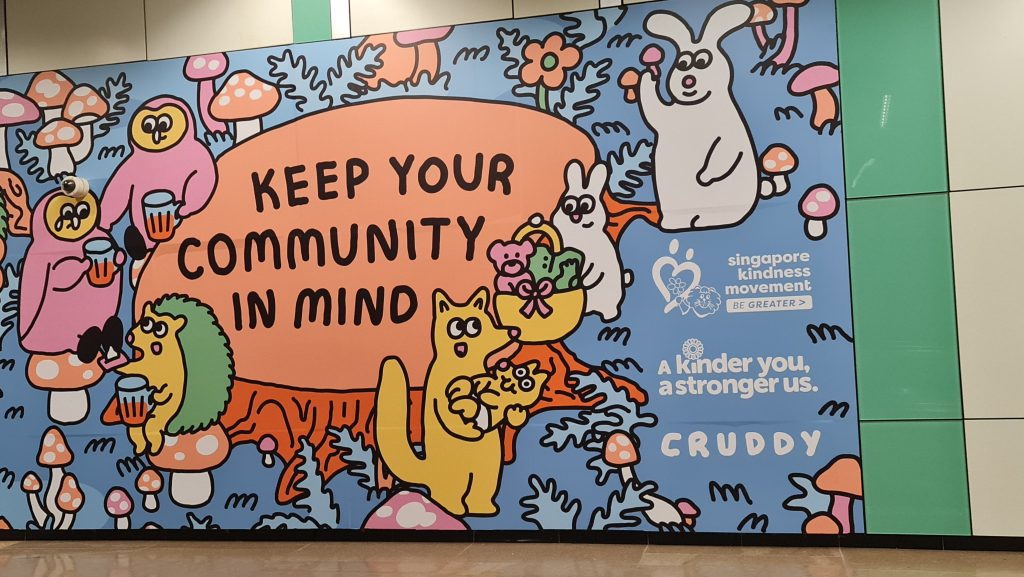
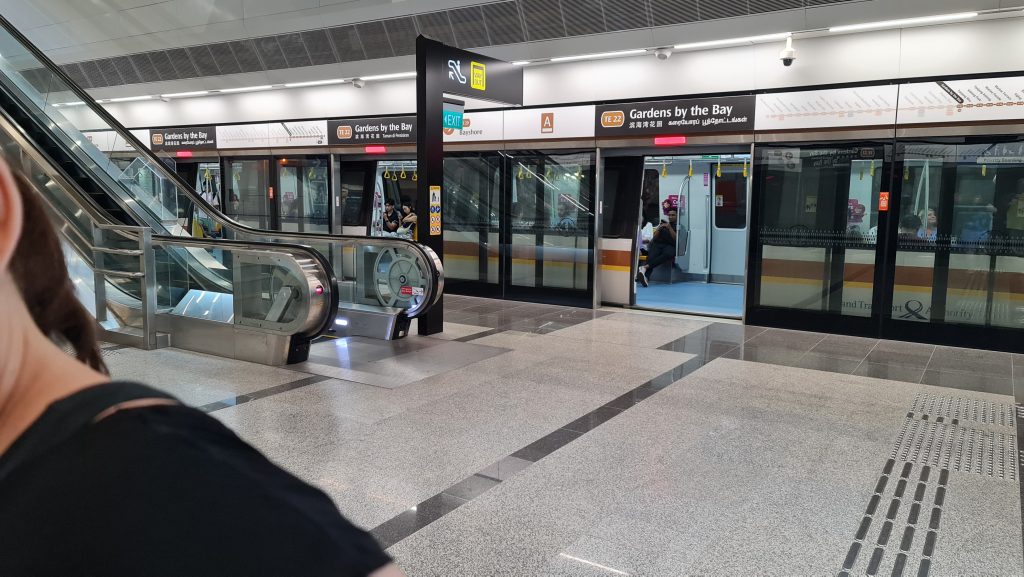
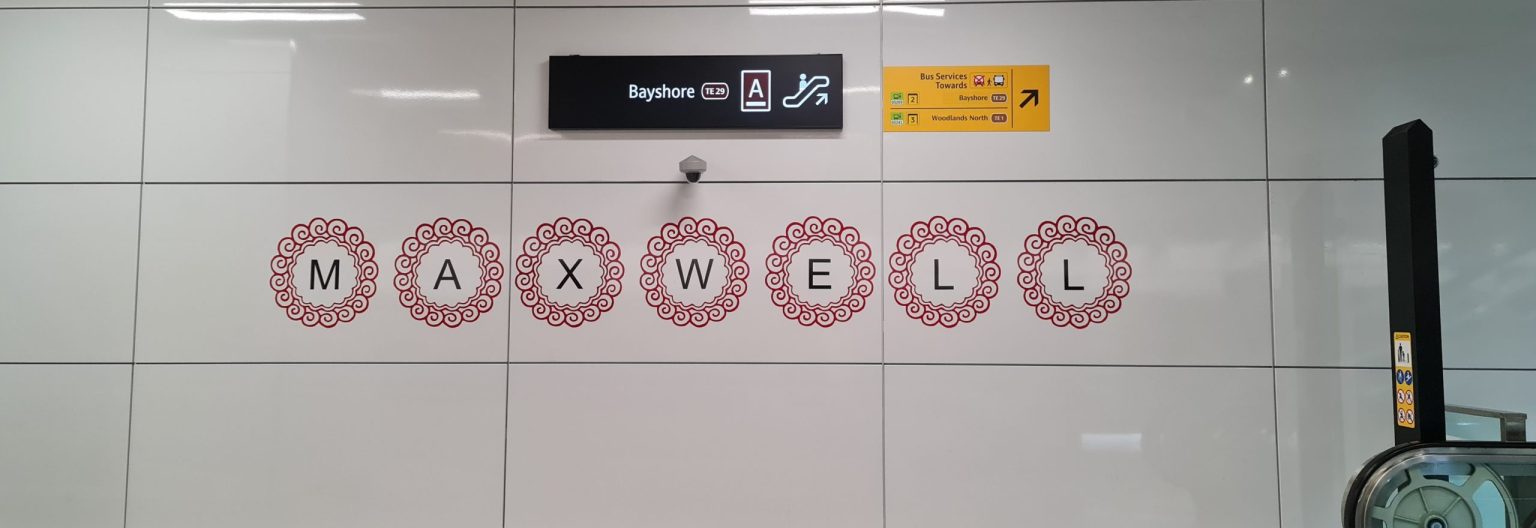
If cities had heartbeats, Singapore’s would hum beneath the surface—steady, efficient, and quietly brilliant. The Mass Rapid Transit (MRT) system isn’t just a way to get around; it’s a masterclass in urban choreography. With over 140 stations and multiple intersecting lines, the MRT is the city’s circulatory system, connecting neighborhoods, cultures, and stories in a rhythm that’s both precise and poetic.
From the moment you descend into one of its sleek, air-conditioned stations, there’s a sense of calm order. The signage is intuitive, the platforms spotless, and the trains arrive with clockwork regularity—often within 2–3 minutes during peak hours. Whether you’re heading to the futuristic skyline of Marina Bay, the heritage enclaves of Chinatown and Little India, or the leafy serenity of Botanic Gardens, the MRT gets you there swiftly and affordably.
Each line has its own personality. The North-South Line (red) slices through the city’s spine, linking residential heartlands to the bustling downtown. The East-West Line (green) stretches from the airport to the industrial west, offering glimpses of everyday life beyond the tourist trail. The Circle Line (orange) loops around the city’s core, perfect for hopping between museums, parks, and waterfronts. And the Downtown Line (blue) dives deep into the cultural and commercial districts, making it a favorite for urban explorers.
What makes the MRT truly special is its accessibility. You don’t need to be a local to navigate it with ease. Tap in with a contactless card, an EZ-Link, or a Singapore Tourist Pass for unlimited rides. Stations are equipped with elevators, tactile paving, and clear announcements in multiple languages. Even the maps—color-coded and thoughtfully designed—feel like invitations rather than puzzles.
But beyond the logistics, there’s something quietly beautiful about riding the MRT. It’s where you see the city breathe. Office workers scrolling through phones, school kids giggling in uniforms, tourists clutching maps with wide-eyed wonder. It’s a shared space, a moment of pause between destinations, where the city’s diversity folds into a single carriage.
And then there’s the small magic: the way the train glides into Bayfront Station, revealing Marina Bay Sands like a cinematic reveal. Or the hush of Botanic Gardens Station, where the greenery seems to seep into the architecture. Even Changi Airport Station, with its seamless link to the terminals, feels like a gentle welcome or a graceful goodbye.
In a city known for its precision, the MRT is more than infrastructure—it’s an experience. It’s the quiet hum beneath the city’s pulse, the thread that ties its stories together. And for travelers like us, it’s a reminder that sometimes, the journey between places is just as meaningful as the destination itself.
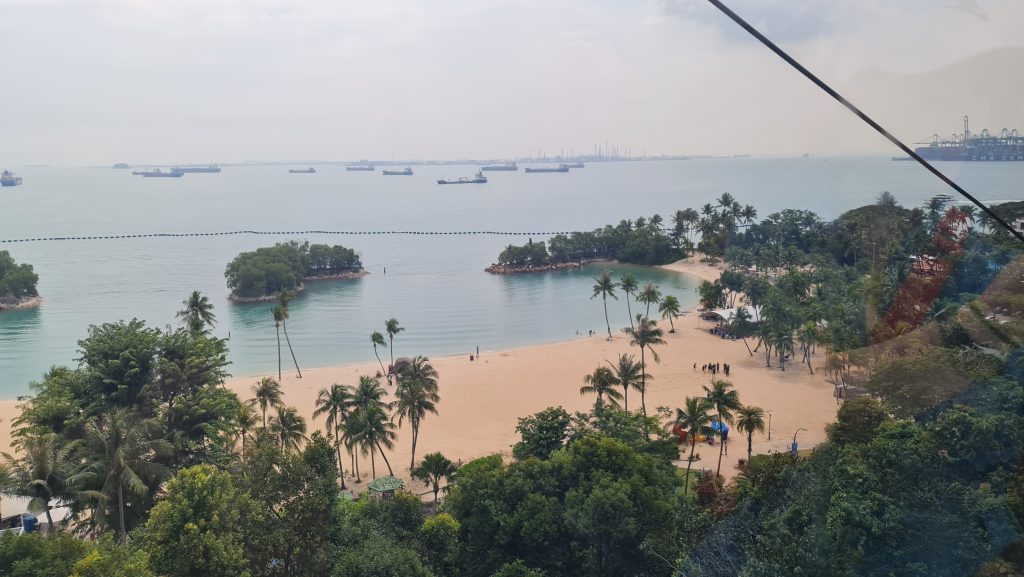
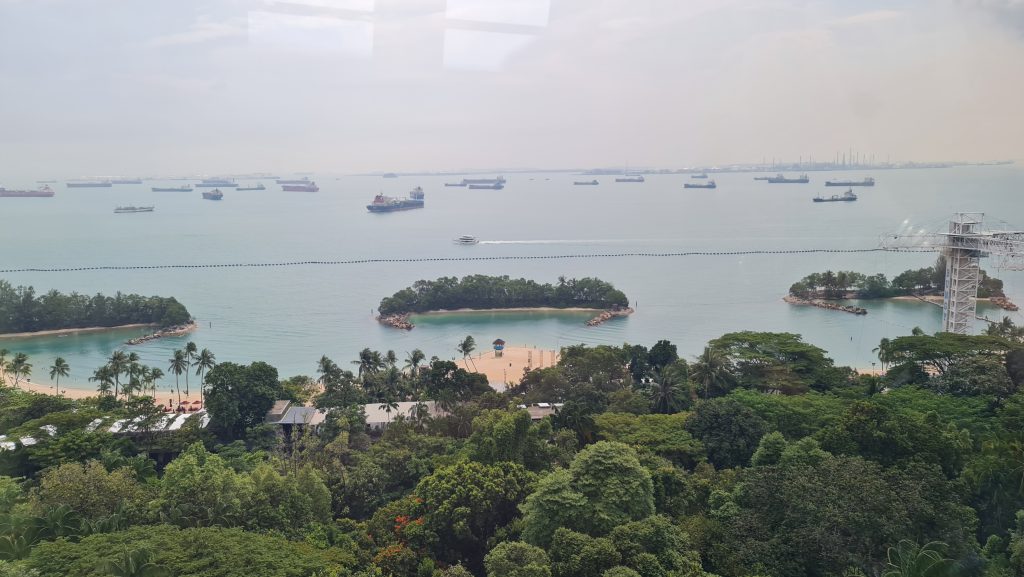
Sentosa Island: A Playful Paradise
If Singapore is the polished jewel of Southeast Asia, then Sentosa Island is its playful, sun-drenched heart. Just minutes from the city center—accessible by cable car, monorail, or even a scenic boardwalk—Sentosa feels like a tropical exhale. It’s where the city loosens its tie, kicks off its shoes, and dives headfirst into fun.
The island is a patchwork of experiences, each stitched with its own flavor of joy. Universal Studios Singapore is the headline act, drawing families and thrill-seekers with its dueling roller coasters, cinematic rides, and live shows. Whether you’re dodging dinosaurs on the Jurassic Park Rapids Adventure or battling Decepticons in Transformers: The Ride, it’s a place where imagination runs wild.
But Sentosa isn’t just about adrenaline—it’s also about awe. The S.E.A. Aquarium is one of the largest in the world, home to over 100,000 marine creatures. Walking through its glass tunnels, surrounded by manta rays and reef sharks, feels like entering another dimension. It’s quiet, humbling, and strangely meditative.
Then there’s the Skyline Luge, a gravity-powered ride that lets you zip down winding tracks with the wind in your hair and the skyline at your back. Pair it with the Skyride, a chairlift that offers sweeping views of the island and the glittering city beyond. For those craving altitude, iFly Singapore delivers the thrill of skydiving—indoors. And if you’re feeling bold, SkyPark Sentosa by AJ Hackett offers bungee jumps and giant swings that will test your mettle and reward you with unforgettable views.
Sentosa’s beaches are a world unto themselves. Siloso Beach is the liveliest, buzzing with volleyball games, beach clubs, and water sports. It’s where adrenaline junkies and cocktail lovers collide. Palawan Beach is perfect for families, with calm lagoons, rope bridges, and even a floating aqua park. Cross the bridge to reach the Southernmost Point of Continental Asia, and climb the watchtower for a panoramic view of the sea. Then there’s Tanjong Beach, the quiet escape. It’s where locals go to paddleboard, picnic, and soak in the serenity—often with their dogs in tow.
Food on Sentosa is just as diverse as the activities. You can sip sangria at FOC by the Beach, indulge in Mediterranean fare at +Twelve, or grab local favorites like laksa and hokkien mee at the Good Old Days Food Court. For something truly magical, Ocean Restaurant lets you dine beside a massive aquarium, with sharks and rays gliding past your table.
And when the sun dips below the horizon, the island doesn’t sleep. The Wings of Time show lights up the night with fountains, lasers, and pyrotechnics set to music—a fitting finale to a day of wonder.
Sentosa isn’t just a destination—it’s a mood. It’s where you rediscover play, where luxury meets whimsy, and where every corner invites you to pause, smile, and dive in.
Final Thoughts: A City That Moves You
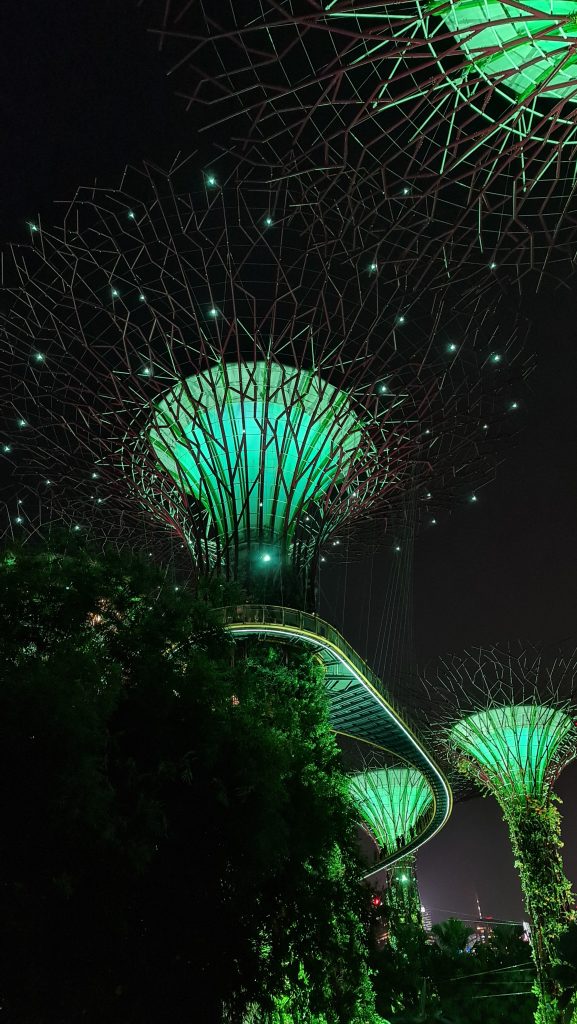
Singapore isn’t just a place you visit—it’s a place that stays with you. It’s a city that doesn’t shout, but whispers in details: the curve of a Supertree against the dusk, the scent of sambal rising from a hawker stall, the quiet kindness of a stranger pointing you toward the right MRT line. It’s a city that knows how to balance—between tradition and innovation, nature and architecture, solitude and connection.
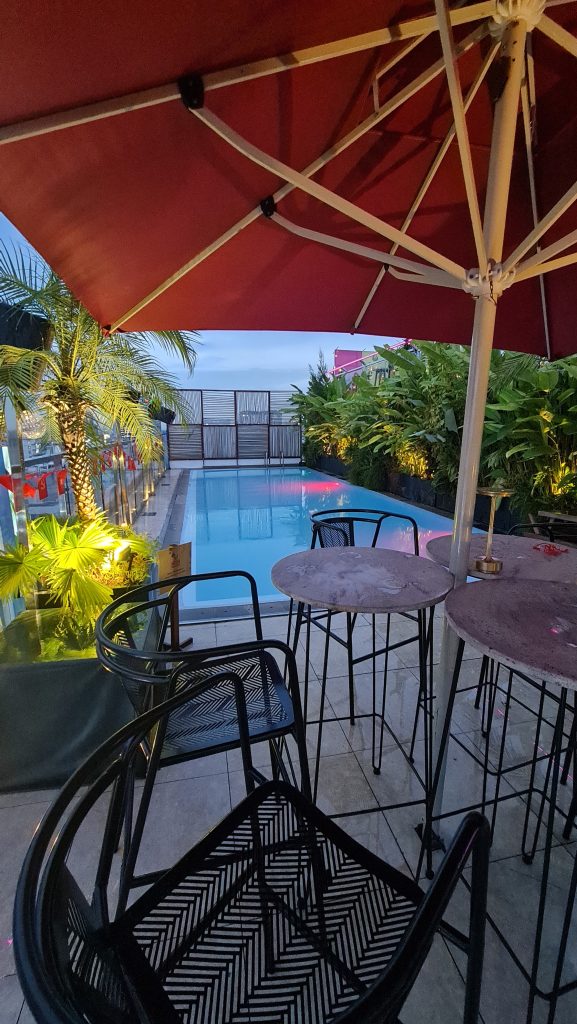
What struck me most wasn’t just the efficiency or the gleaming skyline, but the emotional intelligence of the place. Singapore feels designed not just for movement, but for meaning. You can spend your morning meditating in a garden, your afternoon diving into street food culture, and your evening watching the city shimmer from a rooftop pool. And somehow, it all fits. It all flows.
There’s a rhythm to life here that’s both calming and energizing. The MRT hums beneath your feet, the gardens breathe around you, and the people—warm, witty, and quietly proud—make you feel like you belong, even if just for a moment. Whether you’re wandering through the orchid-lined paths of the Botanic Gardens, floating above the skyline at Marina Bay Sands, or sharing a table with locals at Maxwell Food Centre, Singapore invites you to slow down and look closer.
It’s a city that doesn’t just show you what’s possible—it makes you feel like you’re part of it. And as you board your flight home, you’ll carry more than souvenirs. You’ll carry stories, flavors, and a quiet sense of wonder that lingers long after the journey ends.