
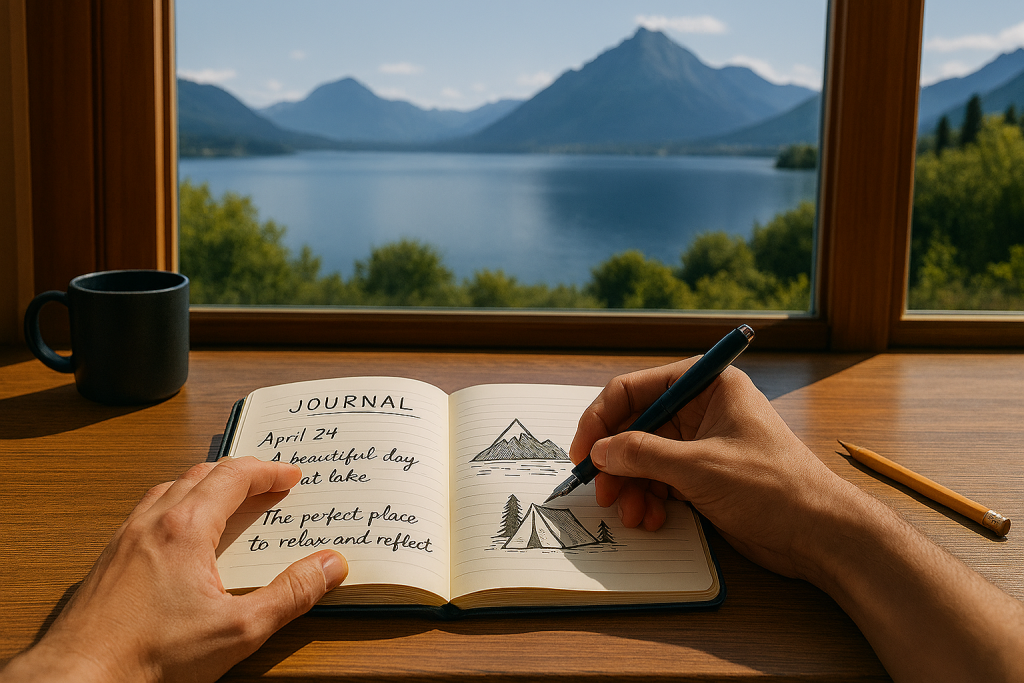
When life gets busy and events around me move fast and feel like it demands more every day, journaling offers me a quiet rebellion—a moment to pause, reflect, and reconnect with myself. Whether I’m chasing clarity, creativity, or calm, keeping a journal has proven to be a transformative habit and one that I’ve been able to build on. In the article below, I dive into the purpose of journaling, its benefits, how to get started, and how to find the perfect journal for your unique style.
Why Do I Journal? The Purpose Behind the Pages
For me, journaling isn’t just about writing—it’s about processing. A tool for:
Whether I’m navigating a big life change or simply want to be more present, journaling helps me tune back into my inner world.
The Benefits of Journaling
Research shows that journaling is known to be good for our mental wellbeing and clarity. Here’s some ways how:
How to Journal: Some Simple Ways to Start
Don’t think that you need fancy prompts or perfect handwriting, just start. Here are a few approaches:
The key is consistency over perfection. Even a few lines a day can make a difference that you’ll see over time.
Finding the Best Journal for You
Your journal should feel like an extension of you. Some things you might like to consider when selecting a journal that suits your needs:
Journal Type | Best For | Features to Look For |
A lined notebook | Daily writing & reflection | Smooth paper, sturdy binding |
Dot grid journal | Good for bullet journaling & sketching | Flexible layout, numbered pages |
A guided journal | Prompt-based reflection | Pre-written questions, themed sections |
Digital journal app | On-the-go journaling | Syncing, password protection, reminders |
Planner-journal combo | Goal setting & productivity | Calendars, habit trackers, to-do lists |
My tip, choose one that feels inviting and fits your needs. If you love the look and feel of it, you’re more likely to use it and once you’re ready to get a new one, assess if the format you using still works for you.
My Last Word
Journaling is a deeply personal practice and over time it’s impact can provide great benefit. It’s not about being a “writer”, it’s about being authentically you. Whether you journal to heal, to plan, or just to breathe, the pages are always waiting.
My recommendation is to grab yourself a pen, open a page, and start where you are. Your story deserves to be heard, even if it’s just by you.
